


KidFirst.ai is an independent initiative that brings together education researchers and practitioners, technologists, and children's media creators around a single shared goal – explore emerging AI technologies and discover their potential to support kids' flourishing from PreK to 5th grade.
KidFirst.ai is committed to learning by doing, leading by example, and always putting kids first.
Project Leadership

Dave Peth, Founder
Mighty Picnic
Dave Peth is an EMMY-winning producer, creator of the PBS KIDS series Lyla in the Loop, and founder/CEO of children’s media production studio Mighty Picnic. Previously, he produced digital suites for projects including PBS KIDS Odd Squad, Peg+Cat, Scribbles and Ink, and Design Squad. He holds an M.Ed. from Harvard University in Technology in Education, and a B.A. from Cornell University in Developmental Psychology and Interactive Media. 

Ying Xu, Ph.D.
Ying Xu is an Assistant Professor of AI in Learning and Education at Harvard University. Her research focuses on designing AI technologies that promote language and literacy development, STEM learning, and wellbeing for children and families. Xu’s current projects investigate the design and effectiveness of conversational AI technologies to serve as language partners and learning companions for children, and how AI affects children’s social interactions and developmental processes. 
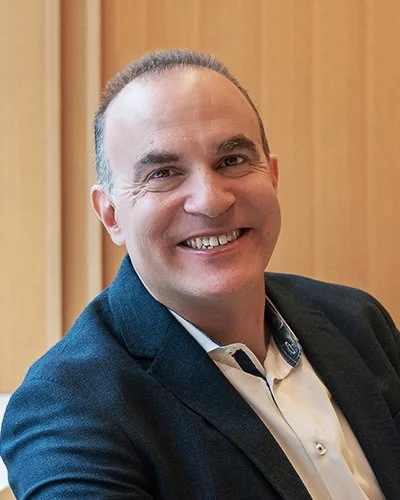
Amon Millner, Ph.D.
Dr. Amon Millner is a Professor of Computing and Innovation at the Olin College of Engineering, where he directs the Extending Access to STEM Empowerment (EASE) Lab. He develops technologies, community programs, and resources to facilitate learners (ages 5 and up) incorporating computing into the way that they play, learn, prepare to fully participate in society, and uplift their communities. Dr. Millner works on government-funded projects that range from operationalizing early-age computational thinking frameworks to establishing coding practices in summer hip-hop dance camps. Avriel Epps,
Ph.D.
Dr. Avriel Epps (she/they), an assistant professor at UC Riverside, holds a Ph.D. in Human Development from Harvard University and an S.M. in Data Science from Harvard’s School of Engineering. A scholar and advocate, Avriel’s research focuses on the intersections of algorithmic bias and identity development across racial and gender spectra. As co-founder of AI4Abolition, she is dedicated to building collective power with and around AI through open-source tools and AI literacy programs in marginalized communities. She is also the author of A Kids Book About AI Bias (DK/Penguin Random House, 2025) and was most recently appointed as the AI-Expert-in-Residence for Black Girls Code.
David Lowenstein
David Lowenstein is CEO and Co-Founder of Lionstone Consulting Group and a senior advisor to organizations advancing children’s learning through media, technology, and cross-sector collaboration. He previously spent 13 years at PBS KIDS, where he led the Ready To Learn initiative, and has held roles at Sesame Workshop and the National Urban League. David’s work focuses on translating research into practice, including recent work as a producer on an AI-powered interactive storybook app supported by the Cooney Center’s Sandbox for Literacy Innovations, and on ensuring emerging technologies support young children’s development and the families and educators around them.Dr. Randi Williams is a researcher, tinkerer, and tech activist passionate about using technology to empower communities. As research lead at Day of AI, a nonprofit spun out of MIT, she equips educators, students, and changemakers to use AI responsibly to transform teaching and learning. Williams's work in AI education has been awarded academic acclaim, including fellowships from Microsoft Research, LEGO, and the National Science Foundation, as well as features in outlets such as The Atlantic, Wired, and the MIT Tech Review. Next Fall, she will join the Carnegie Mellon University’s Human-Computer Interaction Institute faculty as an Assistant Research Professor.
Randi Williams, Ph.D.
The Challenge
Children in PreK through 5th grade are at an especially sensitive and critical time developmentally. AI technologies are advancing rapidly and increasingly entering spaces where children learn and play—yet the development of these technologies is outpacing our ability to understand their impact on young learners.
The current landscape presents several barriers to progress:
Traditional research pathways are too slow. Academic research cycles can't respond quickly enough to the pace of technological change, leaving us perpetually behind the curve.
Media companies are risk-averse. Many see AI technologies primarily as a threat, or instead, narrowly focus on cost savings in producing traditional content, missing opportunities for genuinely innovative, child-centered applications.
Siloed work limits impact. When innovation happens inside a single university, tech company, or media organization, we miss the opportunity to bring together the best minds across disciplines. This fragmentation also introduces bias and conflicting incentives.
Cross-sector partnerships face logistical and legal complexities, yet this moment demands exactly this kind of collaboration. We have a unique opportunity to influence this trajectory—not through restrictions or reactive policies, but through positive demonstration of what responsible, developmentally appropriate, child-centered uses of AI can look like.
Our Approach: Learning by Doing, Leading by Example
Rather than merely advocating for rules for others to follow, KidFirst.ai will demonstrate leadership in this space by creating concrete, tangible artifacts that inform and inspire future work. We will explore what's possible by trying it ourselves; by rapidly prototyping apps, games, books, podcasts, experiences, events, research papers etc. that demonstrate developmentally appropriate uses of AI technology. Specifically, KidFirst.ai will investigate AI applications across three interconnected domains:
1. AI Literacy
How do we educate kids and caregivers about different types of AI, including those which are obscured behind user interfaces or embedded within organizational practices? In what ways might we address larger societal questions, such as ethical uses of AI, and environmental impact? What messages, language, and forms of communication are effective in supporting AI literacy—and for which specific communities?
2. Direct Interaction
How do children and their caregivers interact with AI-powered software and experiences? How might AI tools be leveraged to meet kids’ developmental needs directly, or indirectly, through supporting the trusted adults in their lives?
3. Content Production
How can AI tools be part of making content for kids in a way which respects both the creators and the audience? How might we think more broadly about what “children’s media” means, who creates it, and for what specific purpose? How might we leverage these technologies to better engage or empower caregivers, educators, health care professionals and beyond as they support children' s growth?
How We'll Work: Research Sprints & Tangible Deliverables
KidFirst.ai favors action over speculation. Every research sprint must produce a tangible deliverable. No theoretical papers without prototypes. No recommendations without demonstrations. To accomplish this, we will work in time constrained sprints which will seek to understand a specific question that is narrowly defined enough to be accomplished in a sprint, but broad enough to be useful, for future research or direct application.
Sprint Structure
Two research sprints per year
Research here is defined informally (e.g. user-testing research or exploratory studies) rather than research submitted to peer-reviewed journals (though we remain open to this possibility.)
Each sprint led by a trio: one academic researcher, one media professional, one technologist (with additional collaborators welcome)
Each sprint must result in a prototype. We define “prototype” in the broadest sense possible – whatever deliverable is needed to help answer a question, or prove out an idea. To that end, a prototype might be digital or analog deliverable, an in-person guided experience or virtual asynchronous one, etc.
Each sprint culminates in a virtual conference presentation where prototypes are shared with the broader community of researchers and practitioners.
The results from this work will be shared publicly on the KidFirst.ai site and social channels, free of charge.
Governance, Funding & Editorial Integrity
The project operates under the KidFirst.ai umbrella as an independent initiative, in order to facilitate open collaboration across partner organizations.
Organizational Structure
Project Leadership
Ying Xu, Ph.D., Assistant Professor of Education, Harvard Graduate School of Education
Avriel Epps, Ph.D., Assistant Professor at the University of California, Riverside
Amon Millner, Ph.D., Professor of Computing and Innovation at the Olin College of Engineering
Dave Peth, Founder/CEO Mighty Picnic
David Lowenstein, CEO and Co-Founder of Lionstone Consulting Group
Board of Directors who hold mission-aligned leadership roles at organizations in research, education, media and tech industries
Nermeen Dashoush, Ph. D., clinical associate professor at Boston University Wheelock College of Education & Human Development
Kiki Prottsman, Author, creator of The Educator’s Workshop, former Director of Education at Microsoft MakeCode
David Kleeman, Senior Vice President of Global Trends for Dubit, a strategy/research consultancy and metaverse studio, and children’s media industry leader, has been advocating for developing sustainable, child-friendly practices for more than 35 years.
Advisors include education practitioners, media content creators, technologists, and policy advocates
KidFirst Fellows include the researchers and practitioners who collaborate on each research sprint, as well as other third parties that contribute to their work. Fellows are selected based on merit, receive a budget to fund the project, and have their contributions widely recognized and shared.
Member Organizations include mission-aligned for-profit and 501(c)(3) organizations that provide in-kind expertise or support the dissemination of findings
Partner Benefits & Engagement
Organizations and individuals that join KidFirst.ai will:
Contribute to shaping the field by participating in cutting-edge, collaborative research that demonstrates responsible AI applications for young children.
Gain access to ongoing prototype findings and research outputs, thought leadership, and consulting opportunities, and a network of leading researchers, creators, and technologists focused on this space
Recognition as founding members with prominent credit given in communications and presentation material.
KidFirst.ai isn't waiting for permission or consensus. We're building the future we want to see for kids everywhere. We invite you to join us.
If your organization is interested in becoming a founding partner of KidFirst.ai, we'd welcome a conversation about how we can work together.
KidFirst.ai is an independent initiative that brings together education researchers and practitioners, technologists, and children's media creators around a single shared goal – to explore emerging AI technologies and discover their potential to support kids' flourishing from PreK to 5th grade.
KidFirst.ai is committed to learning by doing, leading by example, and always putting kids first.